
Trenchless sewer repair uses small access points, while traditional repair means digging a full trench along the pipe.
The right method depends on your pipe’s condition and your budget. This guide breaks down both methods so Irving homeowners can make a confident call before a plumber shows up.
Difference Between Trenchless vs Traditional Sewer Repair
The two methods differ mainly in how much digging they require and how they access the damaged pipe.
| Factor | Trenchless Sewer Repair | Traditional Sewer Repair |
| Digging required | One or two small access holes | Full trench along the pipe |
| Yard disruption | Minimal | Significant |
| Typical timeline | Often one day | Several days |
| Cost per linear foot | $80–$250 | $50–$150 |
| Best for | Cracks, root damage, offset joints | Fully collapsed or badly misaligned pipe |
| Durability | 50+ years with proper install | 50+ years with proper install |
Digging And Access
Trenchless sewer repair: Needs only one or two small access holes, usually about the size of a manhole, dug at each end of the damaged section. The rest of the pipe run stays untouched underground.
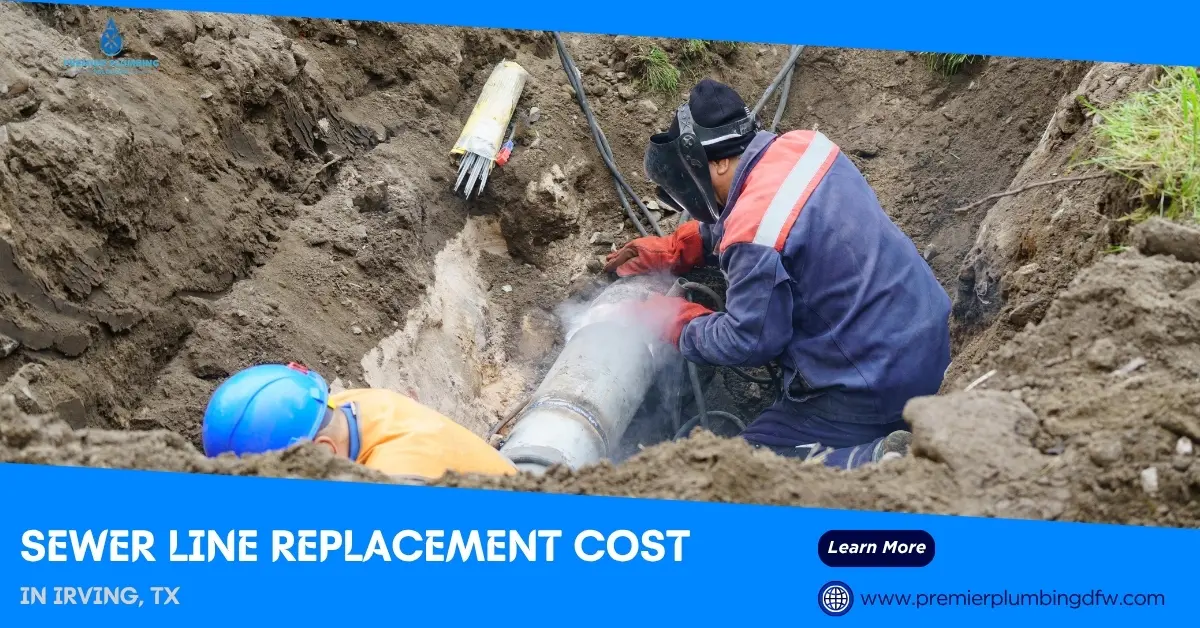
Traditional excavation: Requires digging a continuous trench along the full length of the damaged section, sometimes 3 to 6 feet deep. Crews need enough space for equipment and workers to move safely along the trench.
Yard And Property Disruption
Trenchless sewer repair: Leaves grass, driveways, sidewalks, and flower beds mostly intact, since crews dig only small holes at each end. Most homeowners never need to replant grass or repair hardscaping once the job finishes.
Traditional excavation: Tears up whatever sits above the sewer line, including grass, sidewalks, and sometimes driveways or patios. This matters most on Irving lots with mature trees and full landscaping, since putting the yard back together adds real time and cost after the dig.
Timeline
Trenchless sewer repair: Often wraps up in a single day, since crews skip the lengthy digging and backfilling traditional methods require. Most homeowners get water and sewer service back the same day the work starts.
Traditional excavation: It takes longer once you count trench digging, pipe placement, and backfilling. Jobs can stretch across several days, especially when landscaping or concrete repair joins the schedule at the end.
Cost
Trenchless costs more per linear foot upfront. Traditional excavation costs less for the pipework itself, but restoration expenses often close the gap. See the full cost breakdown below.
Durability
Trenchless sewer repair: Pipe lining and pipe bursting can both last 50 years or longer when installed correctly. A cured-in-place liner resists root intrusion well, since it forms a smooth, seamless interior with no joints for roots to find.
Traditional excavation: A properly installed new pipe lasts just as long as a trenchless repair, as long as the pipe material and installation both meet code. Lifespan depends more on installation quality than on which method a plumber uses.
What Are The Pros And Cons Of Trenchless Sewer Repair
Trenchless sewer repair protects your yard and finishes fast, but it costs more per foot and will not work on every pipe.
Pros:
- Leaves your yard, driveway, and landscaping mostly untouched
- Often finishes in a single day
- Works well under patios, driveways, and mature trees
- Skips most restoration costs after the job
Cons:
- Costs more per linear foot upfront
- Will not work on a fully collapsed or badly misaligned pipe
- Fewer plumbers offer this repair method compared to traditional digging
What Are The Pros And Cons Of Traditional Sewer Repair
Traditional sewer repair costs less per foot and handles any type of pipe damage, but it disrupts your yard and takes longer to finish.
Pros:
- Costs less per linear foot for the pipework itself
- Works on any type of damage, including a fully collapsed pipe
- Widely available, since most plumbers offer this method
- Simple, well-tested process with decades of use
Cons:
- Tears up grass, sidewalks, and sometimes driveways
- Often takes several days to finish
- Restoration costs can push the total price close to or past trenchless
Trenchless vs Traditional Sewer Repair Cost Comparison
Trenchless repair usually costs more per foot, but the full picture often favors trenchless once you add restoration costs.
Homeowners in Irving often see trenchless sewer repair priced between $80 and $250 per linear foot. Traditional sewer repair using open trenches often runs $50 to $150 per foot for labor and materials alone.
| Cost Factor | Trenchless | Traditional |
| Per linear foot | $80–$250 | $50–$150 |
| Landscaping repair | Rarely needed | Often needed |
| Driveway or concrete repair | Rarely needed | Common if pipe runs underneath |
| Permit fees | Varies by city | Varies by city |
Traditional excavation looks cheaper on paper. Once you add torn-up grass, cracked concrete, and replanted flower beds, that gap closes fast. Exact pricing depends on your pipe, soil, and property, so a camera inspection gives you a real number instead of a guess.
How Trenchless Sewer Repair Works
Trenchless sewer repair fixes or replaces a damaged pipe through small access points instead of a long trench.
A crew digs one or two small holes instead of a full trench across your yard. This keeps your lawn, driveway, and flower beds mostly untouched.
Pipe Lining
Pipe lining creates a new pipe inside the old pipe without removing it. This trenchless solution works well on a damaged sewer line with cracks or small holes, as long as the pipe still holds its original shape.
- A sewer scope confirms the exact damage location
- A crew coats a flexible liner with resin
- The crew pulls the liner through the existing pipe
- The liner hardens in place and forms a smooth, new pipe inside the old one
Pipe Bursting
Pipe bursting works differently than lining. This method fits a badly cracked or original pipe that needs full replacement, not just a liner, as long as the pipe has not fully collapsed.
- A machine pulls a bursting head through the old pipe
- The head cracks the old pipe apart as it moves forward
- The machine pulls a new pipe, often made from HDPE material, in behind it
- The main sewer connection stays intact once the new pipe sits in place
This trenchless method works well for cracked, offset, or root-damaged pipe that still holds together.
How Traditional Sewer Repair Works
Traditional sewer repair means digging a full trench to reach and replace the damaged pipe.
This repair method has worked for decades and still fits certain jobs today, especially when a sewer system has a broken pipe that trenchless tools cannot pass through.
- A plumber runs a camera through the line to find the problem
- Crews mark the damaged section and dig a trench along its full length
- Workers remove the old pipe, including old cast iron sewer or clay pipe when present
- Crews lay a new pipe in its place
- Crews backfill the trench and restore the surface above it
This process supports full repair and rehabilitation of a damaged sewer line, even when the pipe has collapsed or shifted badly.
When Trenchless Repair Makes Sense
Trenchless repair fits best when the pipe is cracked, root-damaged, or hard to reach without digging up your yard.
- Small cracks or hairline breaks in the pipe
- Root intrusion from nearby trees
- Offset joints that have not fully separated
- A line running under a driveway, patio, or a tree you want to keep
As long as the pipe holds its shape, trenchless methods can usually fix it.
When Traditional Excavation Makes Sense
Traditional excavation makes sense when a pipe has fully collapsed or shifted out of alignment.
- A fully collapsed section of pipe
- Severe misalignment that blocks a liner or bursting head
- Multiple failure points along one main sewer line
- An old, crumbling cast iron sewer with widespread damage
In these cases, digging becomes the safer, more reliable path once the pipe has lost its structure.
What Affects The Final Price
Five main factors decide your final cost, no matter which repair method you choose.
- Pipe depth underground
- Total pipe length needing repair
- Soil type and stability
- How easy the pipe is to access
- Whether the line runs under pavement or landscaping
Irving’s clay-heavy soil can shift with the seasons, which sometimes adds extra work to either method.
Questions To Ask Before You Hire A Plumber
Asking the right questions before you hire protects you from a rushed or inaccurate quote.
Do They Offer Both Repair Methods?
A plumber who only offers one method will usually recommend that one, whether or not it fits your pipe. Premier Plumbing Solutions offers both trenchless and traditional options, so the recommendation matches your actual problem.
Will They Camera-Inspect The Line First?
A quote without a camera inspection is really just a guess. Ask whether the plumber scopes the line before pricing the job.
What Did The Camera Inspection Show?
Where the damage sits, what caused it, and what the pipe is made of. Clear answers signal a plumber who actually checked your line.
Quick checklist before you hire:
- Does the plumber offer both trenchless and traditional repair?
- Will they camera-inspect the line before quoting?
- Can they explain what the camera found in plain terms?
- Does the quote include restoration costs, or just the pipe repair?
FAQs
Is trenchless sewer repair more expensive than traditional repair?
Trenchless usually costs more per linear foot. Traditional repair often catches up in total cost once you factor in restoration work.
How long does trenchless sewer repair last?
A properly installed liner or burst-pipe replacement can last 50 years or longer. Pipe material and installation quality both affect how long it holds up.
Can every sewer line be repaired with trenchless methods?
No. A fully collapsed or badly misaligned pipe usually needs traditional excavation instead, since trenchless tools need a mostly intact pipe to work through.
How do I know which method my sewer line needs?
A camera inspection gives you the clearest answer. It shows the damage type, location, and pipe material, which points to the right repair method for your home.
Does a commercial building need a different plumber than residential?
Commercial plumbing often involves larger pipes and different code requirements than a home. Premier Plumbing Solutions handles both residential and commercial sewer repairs across Irving.
Get A Sewer Line Inspection In Irving, TX
If your Irving home shows signs of a sewer line problem, Premier Plumbing Solutions can help you weigh trenchless vs traditional sewer repair with confidence. Our licensed plumbers run a camera inspection before quoting any job, so the price reflects what your pipe actually needs. We walk Irving homeowners through their sewer dig vs trenchless options in plain language, covering both pipe bursting vs excavation trade-offs before any work begins. Call 469-277-9204 to schedule your inspection today.